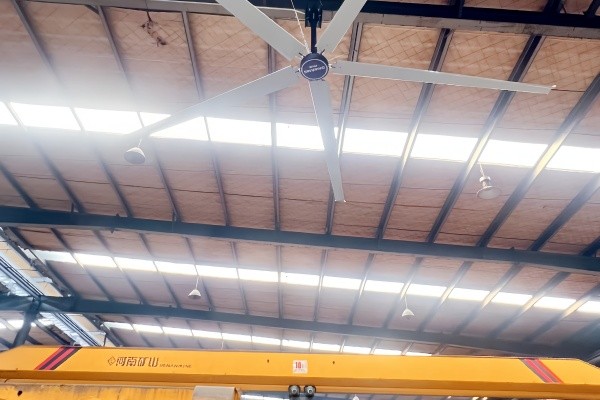
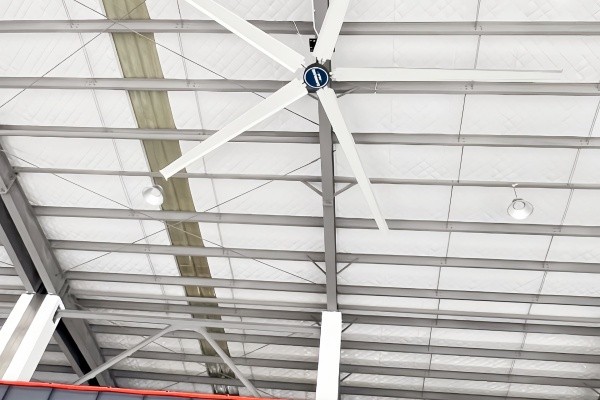
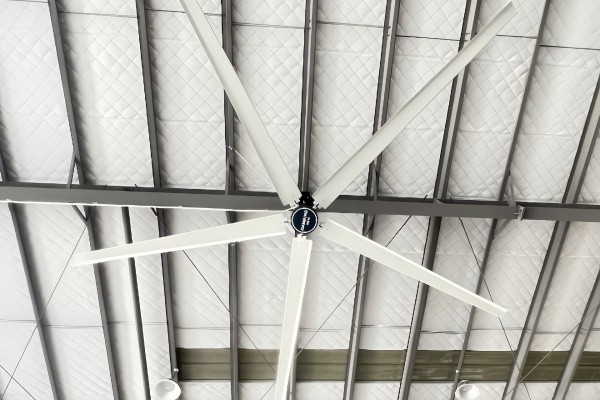
Welding fume must be captured at source; low-speed circulation can bring uncollected stagnant air back into the main flow but must never push contaminants across neighbouring workstations. The order of work mattered more than the equipment. Capture efficiency was reviewed first, because more circulation on top of poor extraction simply spreads the plume.
Check capture first
Filters, hood distance and flexible duct routing on portable fume units were checked station by station. Raising circulation speed before this step would only have made the fume layer wider, not smaller. Circulation should never be aimed across a process boundary where cleanliness or pressure differences are controlled. Shops with dust or fume generating processes accumulate contaminants during the closed heating season; circulation dilutes but never replaces local extraction. Airflow should avoid zones that are sensitive to process velocity and work with the abatement or process-exhaust system. Where a process emits moisture, log the production rate so humidity readings can be interpreted correctly. Metal parts sweat when surface temperature drops below dew point, so controlling local humidity is more direct than simply adding heat. Halls with light fibres or powders balance dispersion against humidity; slow whole-volume circulation disturbs material less than strong local jets. A credible industrial ceiling fan supplier should be able to map every certificate and drawing to the exact contract model.
Set a direction, not just a speed
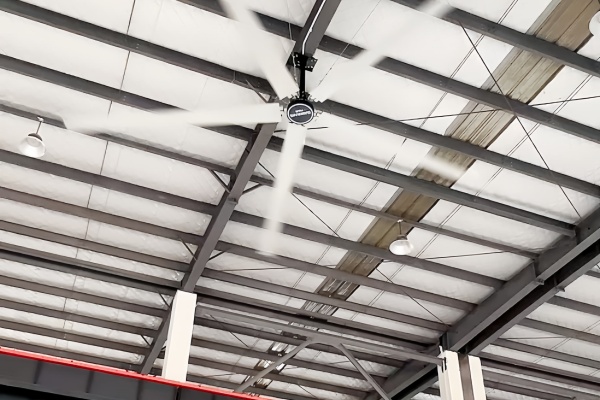
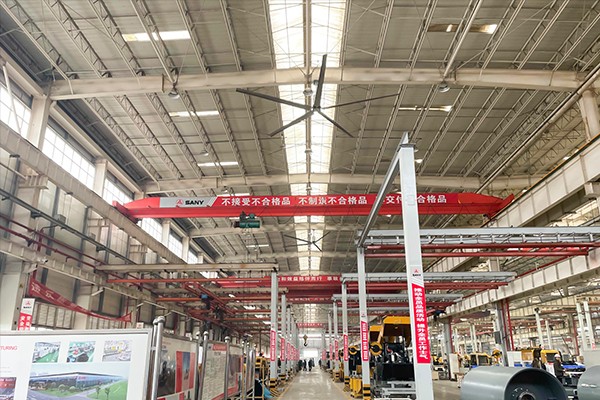
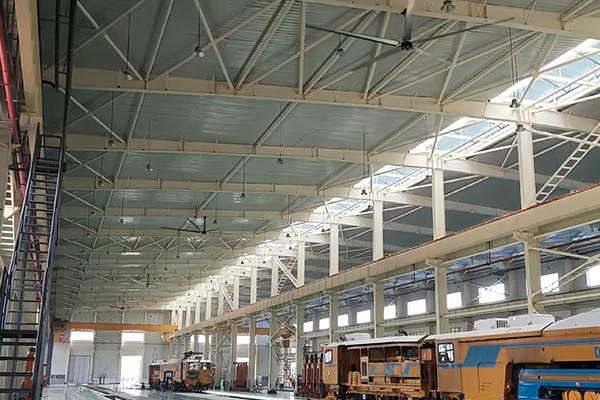
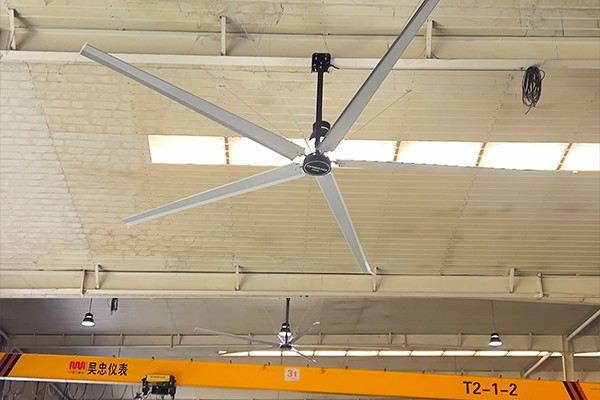
Low-speed operation was arranged so air moved from clean areas toward the fume-producing band. Velocity was capped low enough not to disturb shielding gas at the arc, which is a weld-quality constraint. In summer the airflow supports evaporative cooling on the skin; in winter low-speed reverse pushes trapped roof heat back down. Same machine, two operating logics. Obstructions change the floor-level spread pattern more than they change the nominal airflow figure printed in a catalogue. HVLS stands for High Volume Low Speed: a large-diameter blade set drives a column of air downward, which then spreads horizontally across the floor. Reverse rotation sends air along the ceiling first and lets it descend gently along the walls, avoiding a direct cold draft on workstations. Zone boundaries should follow racking and partitions, since a control group that straddles a barrier will never behave consistently. Low velocity over a large area will not scatter paperwork, labels or light packaging, which is why the approach suits continuous warehouse operations. A Warehouse HVLS Fan is best judged on zone-level readings rather than a single spot temperature.
Records and winter constraints
Run hours of extraction equipment and filter changes were logged against the site emission-control requirements. Extra spot readings were taken with doors closed; any anomaly triggered a stop-and-check rather than a speed increase. Align the internal energy ledger with the reporting framework before collecting data, not after the year closes. Autumn-winter air pollution control programmes apply differentiated production curbs in some regions, so plants balance output scheduling with compliant ventilation. Keep a dated copy of any public document cited in a proposal, so later readers can verify the wording. China's 2026 three-year energy-saving and carbon-reduction retrofit action plan calls for upgrading motors, fans, pumps and similar energy-using equipment in key industries. Cite document titles, reference numbers and issue dates, and never infer that a supplier has been listed in any catalogue or subsidy programme. Policy summaries in a quotation should stay descriptive; eligibility and subsidy questions belong to the client's advisers.
The points above are condensed into a table that can be copied into a site record sheet.
Element | Primary control | Role of circulation |
Fume source | Local capture | No interference with shielding gas |
Upper layer | Extraction and ventilation | Slow return to main flow |
Adjacent stations | Occupational hygiene | No cross-flow |
Compliance | Run logs | No inferred reduction figures |
What to put in the record
For the file, keep the layout drawing, the zone grouping, the seasonal speed profile and the per-unit test records together. Add the date of the next planned inspection and the name of the person who signed the handover, so the following team can compare like with like.
Boundaries and caveats
Occupational exposure and fugitive emission limits are set locally; circulation never replaces extraction or abatement equipment. Parameters quoted here come from published product information and general industry ranges; the applicable scheme depends on a site survey, structural review and measured records.
DAWANG FAN (Jiangsu Dawang Ventilation Machinery Co., Ltd.), an HVLS fan manufacturer China, designs and manufactures in-house and supports PMSM direct-drive series, IoT group control and a 4S maintenance programme.