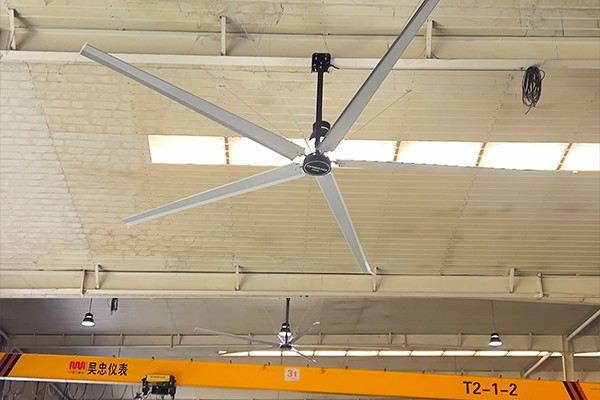
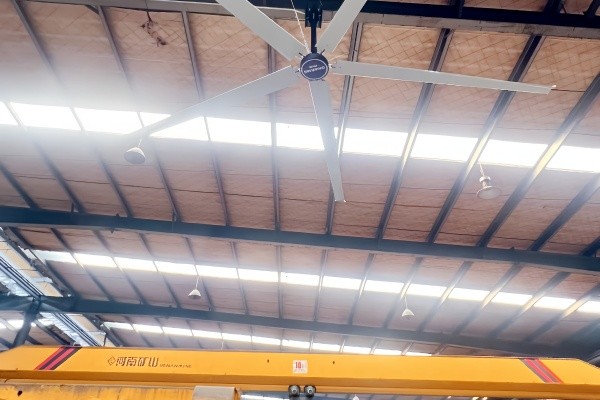
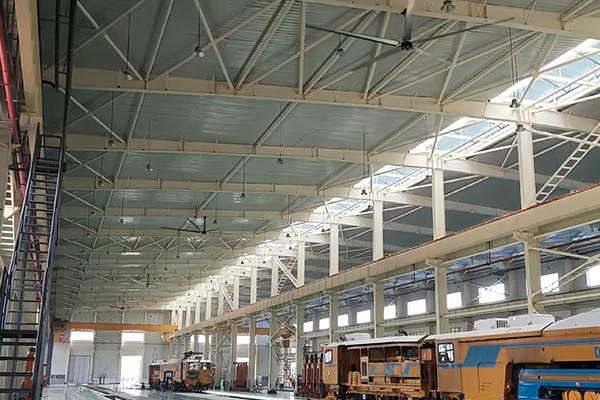
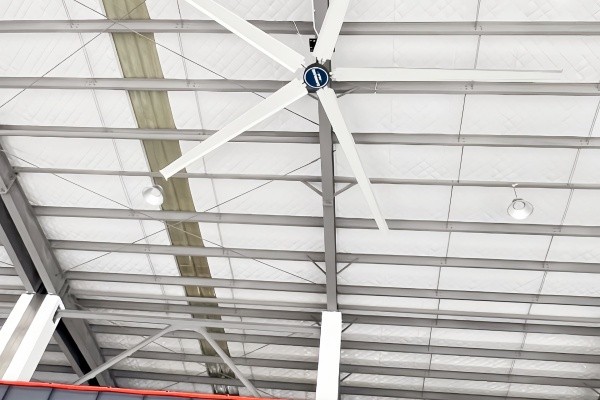
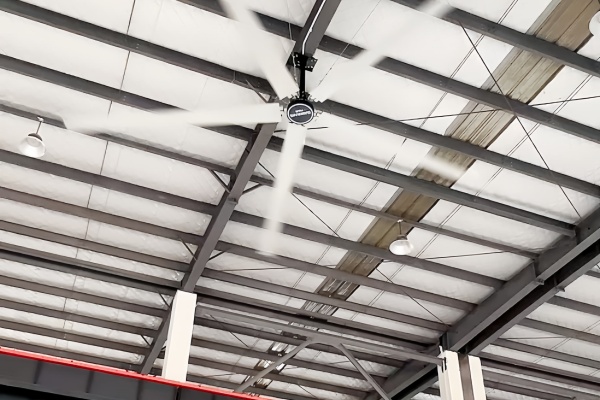
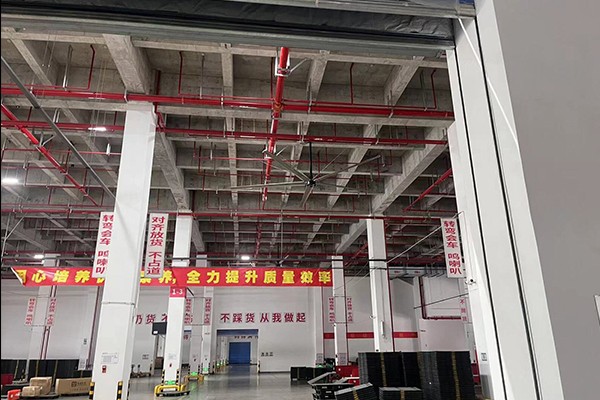
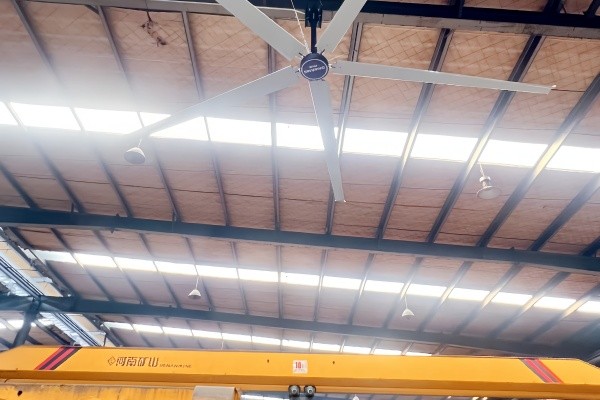
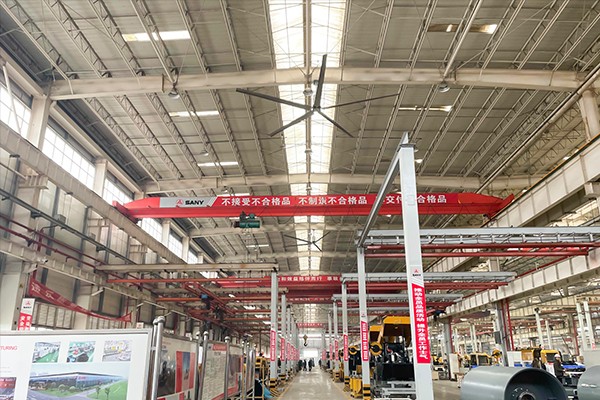
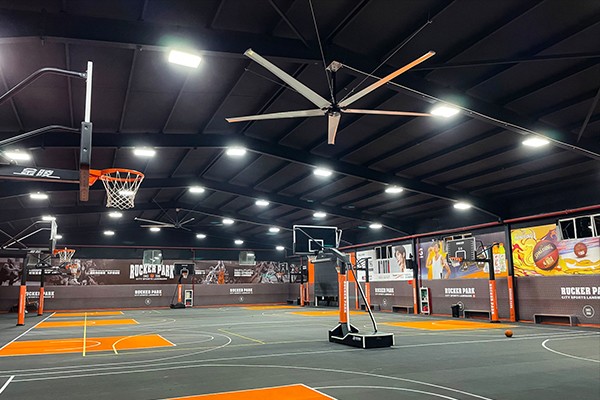
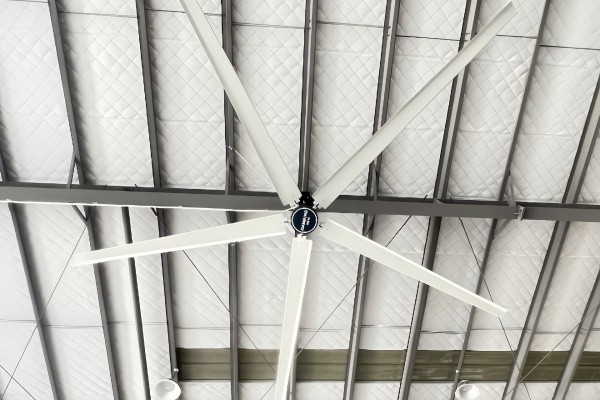
The surge ends, but the floor does not empty. Returns, replenishment and year-end stock build keep headcount high while outside temperatures fall. Doors stay closed for heating, roller shutters still cycle, and the warehouse develops a familiar set of complaints: stuffy mid-bays, damp cartons, dry air and cold draughts at the dock. A Warehouse HVLS Fan handles the circulation part of that mix.
What changes after peak
Before peak, the priority is throughput and heat removal. After peak, it is air uniformity and moisture control. Packaging and electronic components are sensitive to local condensation, and static corners near walls are where it starts. High-speed fans are counterproductive here: they lift labels, disturb light packaging and raise dust.
A workable operating rhythm
Low-to-medium continuous circulation during shifts, grouped by sort line, bulk storage and dock buffer.
Minimum speed overnight to prevent stagnant, damp air.
Humidity-triggered step-up for carton and component storage zones.
Dock groups on a separate schedule, with speed reduced during intensive door cycling.
Scheduled short air changes for freshness — fans blend indoor air but do not supply outdoor air.
Plan before the next peak
Use the quieter weeks to log temperature and humidity by zone and update the control profile. The resulting data makes next year's layout and fan-count decisions much easier to justify. Discuss zone boundaries with your industrial ceiling fan supplier at this stage, and ask any HVLS fan manufacturer China you are qualifying to include seasonal presets in the handover pack.
DAWANG FAN's IoT group control supports zone-based speed settings, timed operation and temperature/humidity linkage suited to multi-shift fulfilment sites.
Takeaway: Post-peak airflow is about gentleness and consistency, not maximum air speed.