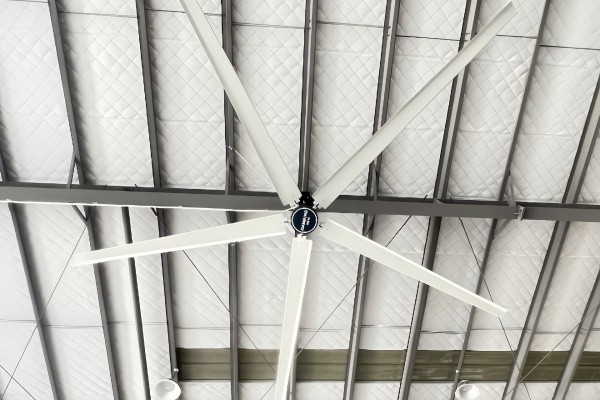
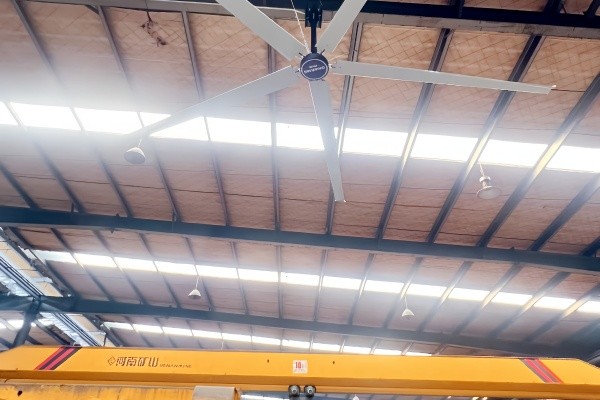
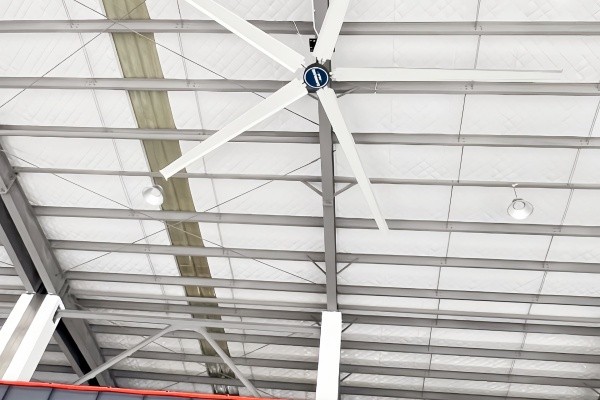
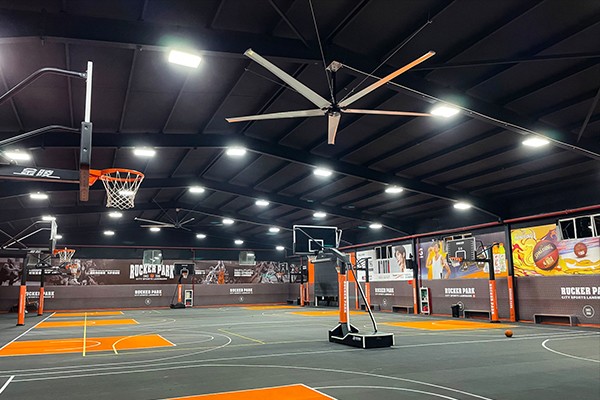
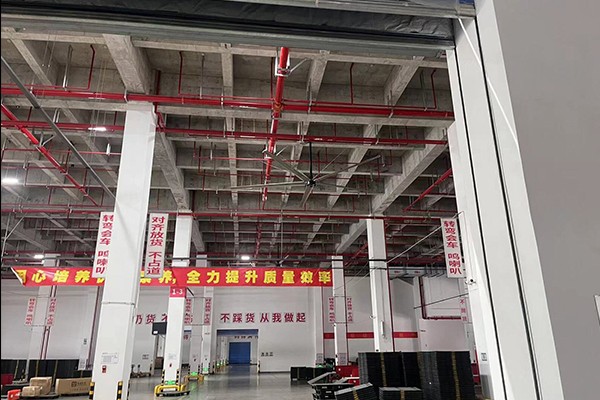
Year-end shutdown windows are short, and a mis-specified Warehouse HVLS Fan is expensive to undo — it means new hangers, new cabling and another production stop.
Mistake 1 — Comparing diameter and peak airflow only
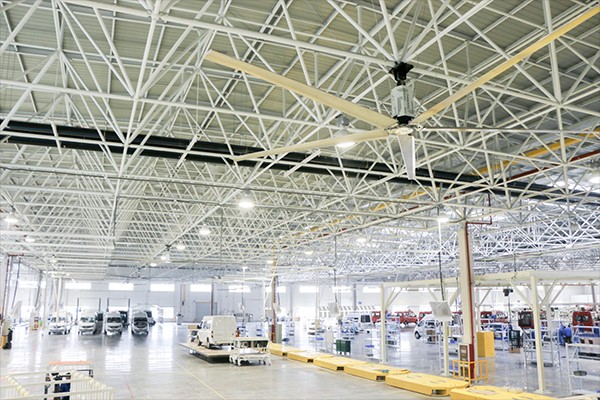
Diameter sets coverage; motor type, blade aerodynamics and control granularity determine results. Winter performance lives at low rpm, which peak airflow figures say nothing about.
Mistake 2 — Skipping structural review
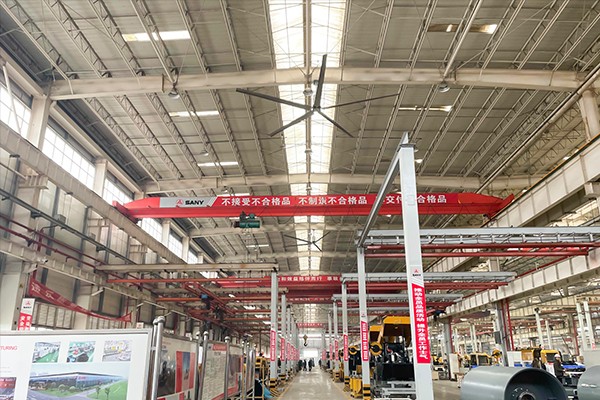
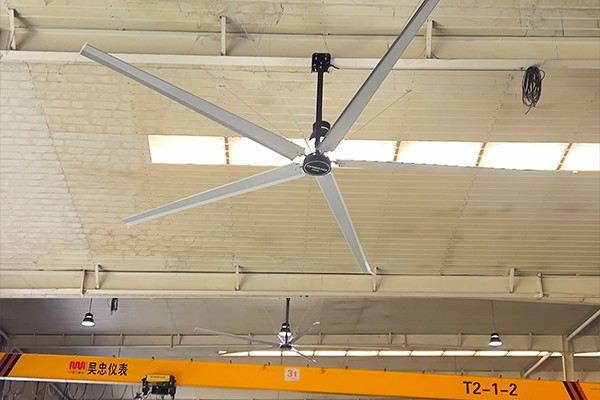
Hanger points must be approved by the building's structural engineer. Check clear height, beam positions, luminaires, sprinklers and crane rails. Where conditions fail, vertical, wall-mounted or mobile formats are often the faster answer than forcing a ceiling install.
Mistake 3 — Carrying summer settings into winter
Forward and medium-to-high speed in summer; reverse and low speed in winter. Without a seasonal preset, operators either switch the fan off or complain that it makes the building colder.
Mistake 4 — Treating the fan as ventilation
An HVLS fan mixes indoor air. CO₂ buildup, dust and fumes need fresh-air supply and local extraction. The fan then distributes that fresh air evenly — an auxiliary role, not a substitute.
Mistake 5 — No maintenance plan
Fall-arrest cables, anti-loosening fasteners and hanger assemblies need periodic inspection with records. Redundancy only works while it is verified.
A minimum viable checklist
Survey data → structural review → model and layout → summer/winter control presets → installation and commissioning → maintenance ledger. Six items, all of them before the order is released.
A competent industrial ceiling fan supplier will volunteer this sequence, and a dependable HVLS fan manufacturer China will deliver the seasonal presets and inspection records as part of handover. DAWANG FAN follows a survey-to-4S-maintenance workflow across its HVLS range.
Takeaway: Most fan problems are specified in, not manufactured in.