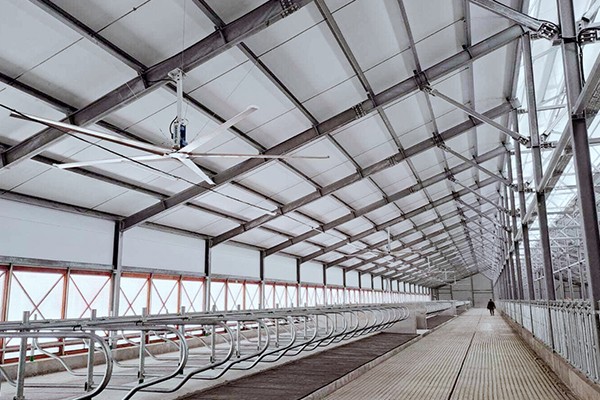
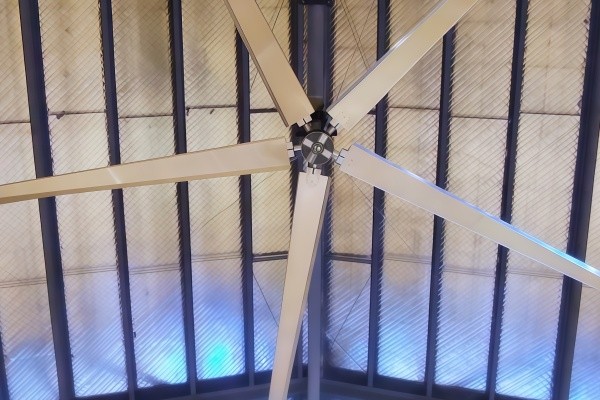
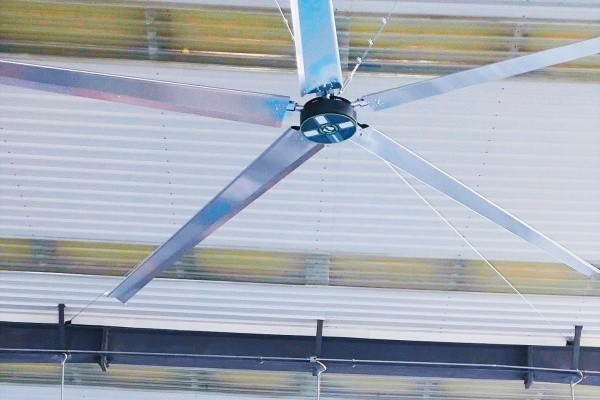
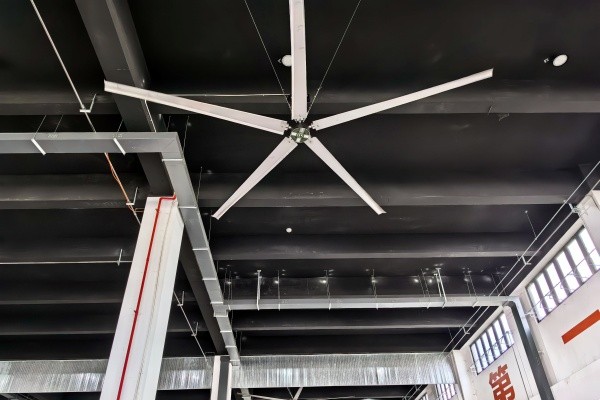
Choose the drive by annual running hours, not by purchase price. A Warehouse HVLS Fan that runs two shifts year-round and one that runs six weeks a summer need very different motors.
Five dimensions
Dimension | PMSM direct drive | Gearbox drive |
Transmission | No gearbox | Gear reduction, wearing parts |
Noise | Lower, no gear mesh | Gear and bearing noise |
Low-speed efficiency | Strong across the rpm range | Transmission losses more visible |
Maintenance | Essentially maintenance-free | Periodic oil checks and replacement |
Initial cost | Higher | Lower |
Why low speed decides it
Most of a fan's life is spent off peak. Winter destratification uses the lowest rpm for months, and gearbox efficiency typically falls away from its design point. For heated warehouses in cold climates, that difference shows up in the annual bill and in the maintenance calendar.
Where gearbox still makes sense
Seasonal-use buildings, low annual hours, tight upfront budgets, or auxiliary areas where a scheduled shutdown for service is easy to arrange. There is no universally "best" motor — only the best fit for the duty cycle.
What to request in the RFQ
Ask for efficiency data across the rpm range, continuous-run aging records, noise figures at low speed, and ingress protection test basis. A capable industrial ceiling fan supplier will provide all four without being chased; a serious HVLS fan manufacturer China will also explain how the motor is matched to the blade set and balancing process.
DAWANG FAN offers PMSM permanent-magnet synchronous series with IoT group control, temperature/humidity linkage and remote monitoring, plus vertical, wall-mounted and mobile formats where ceiling mounting is not feasible.
Takeaway: Put your annual operating hours in the first line of the enquiry. It determines the answer.