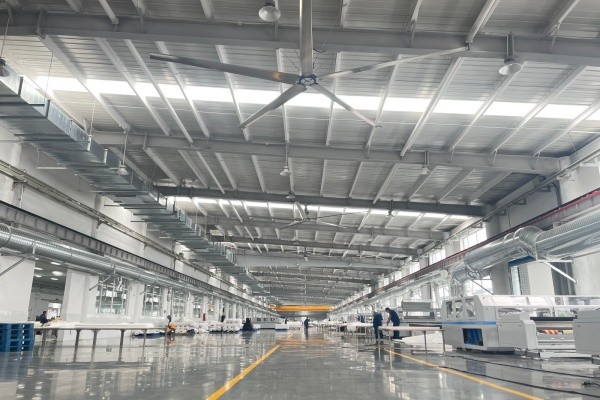
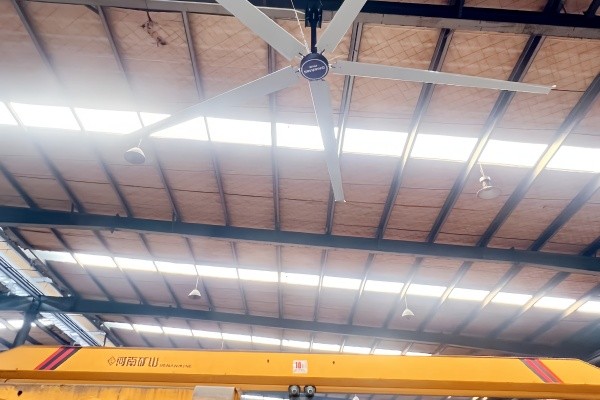
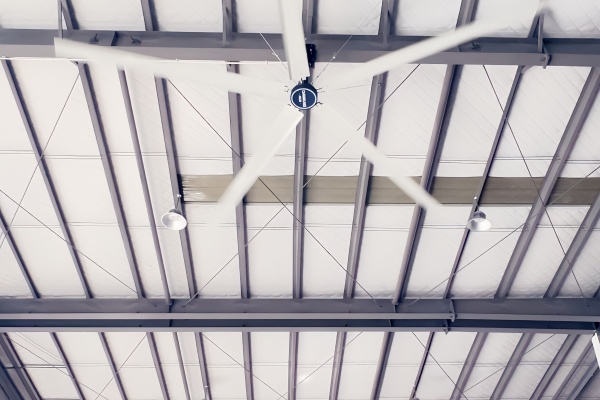
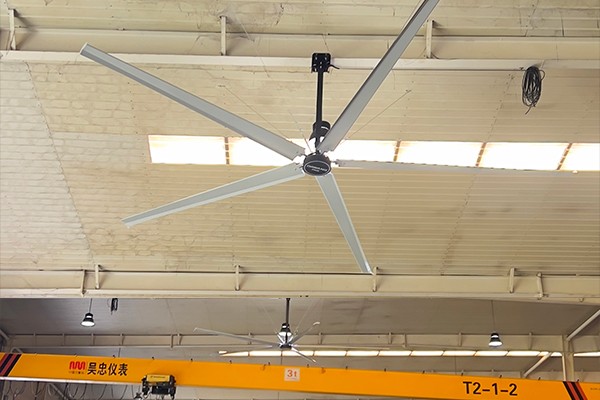
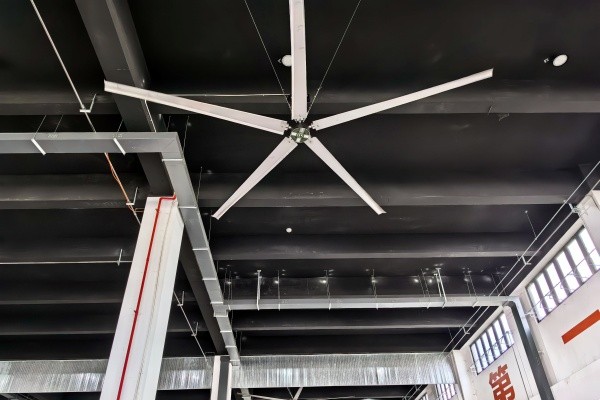
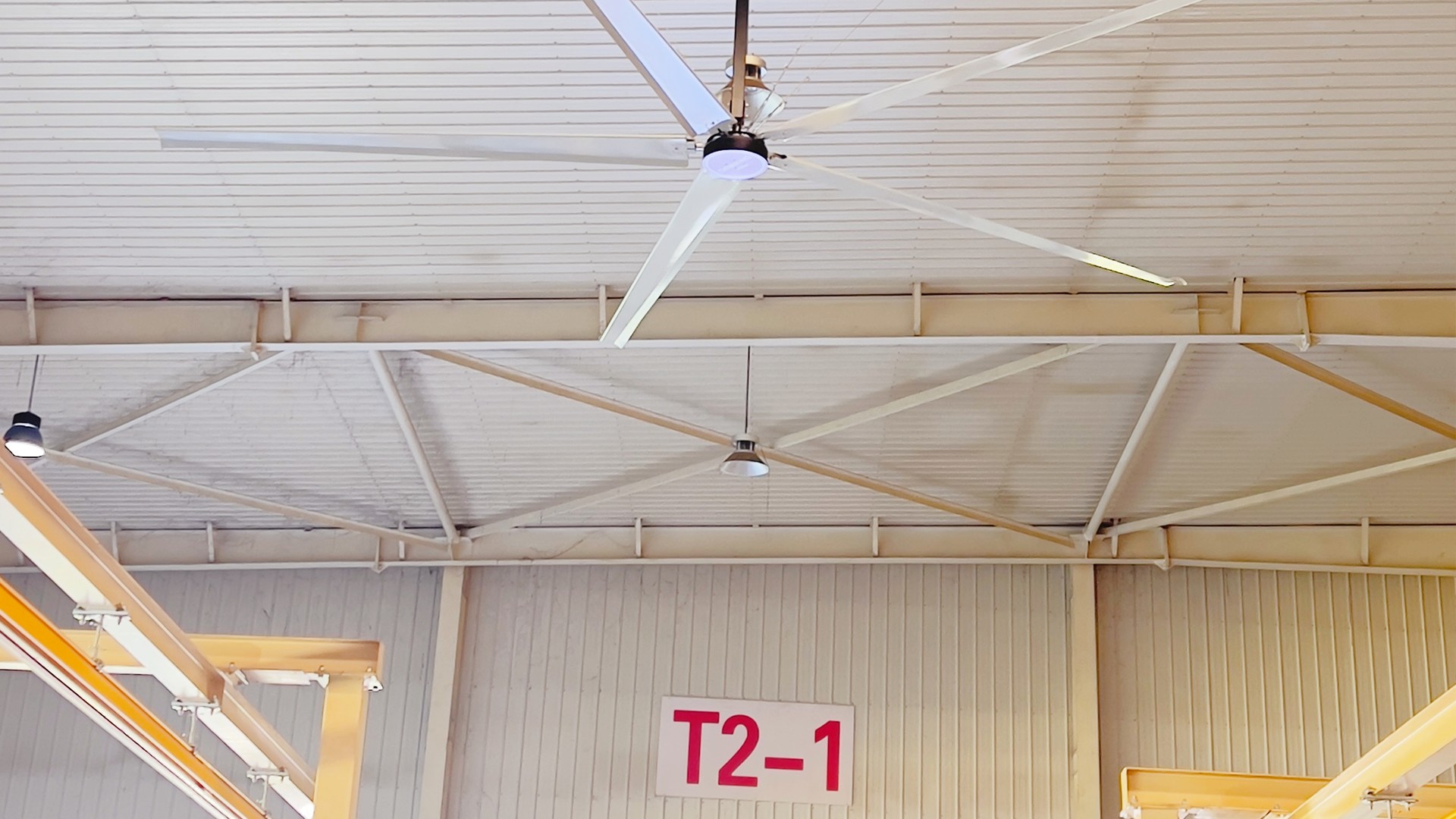
Same fan, opposite logic: summer is forward and faster, winter is reverse and slower. Getting this wrong is the single most common reason a Warehouse HVLS Fan gets switched off in November.
Two different airflow paths
Forward rotation drives a column of air straight down to the floor. At medium-to-high speed it accelerates sweat evaporation and delivers several degrees of perceived cooling — ideal in July, unwelcome in January.
Reverse rotation moves air along the ceiling first. It spreads horizontally, then descends slowly along the walls. Occupants feel almost no air movement while the whole volume is gently mixed and roof-level heat returns to the working plane. No draft, no extra heating load.
The comfort trap
Complaints that "fans make the warehouse colder" are almost always traced to summer settings left unchanged. Forward high speed in a heated building strips heat from the skin even while the thermostat reads normal. The fix is a strategy switch, not more heaters.
Seasonal commissioning checklist
Switch direction to reverse and set the lowest rpm that still closes the measured roof-to-floor gap.
Re-group zones: dock-door and high-traffic areas need separate schedules.
Delay fan start shortly after heating starts, then ramp down on a temperature deadband.
Re-check humidity thresholds for condensation-prone stock.
Save the profile as a named winter preset for next year.
Ask your industrial ceiling fan supplier whether reverse mode, stepless speed control and zone presets are included in the controller — not just in the motor. Many procurement teams comparing an HVLS fan manufacturer China focus on diameter and overlook the control layer that actually delivers winter performance.
DAWANG FAN's W.Fans series supports forward/reverse operation, 10–85 rpm stepless control, app-based group management and fire-alarm linkage.
Takeaway: Winter mode is a control strategy with a hardware prerequisite. Commission both.