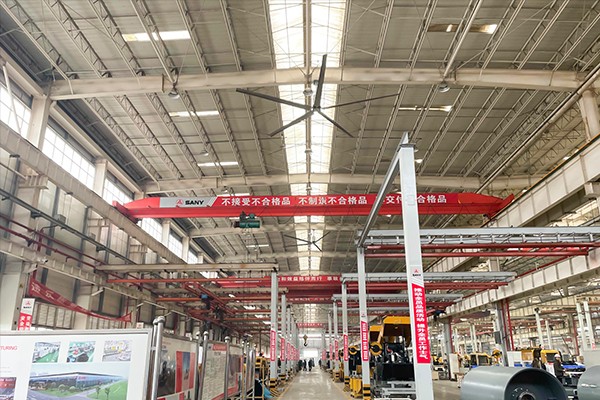
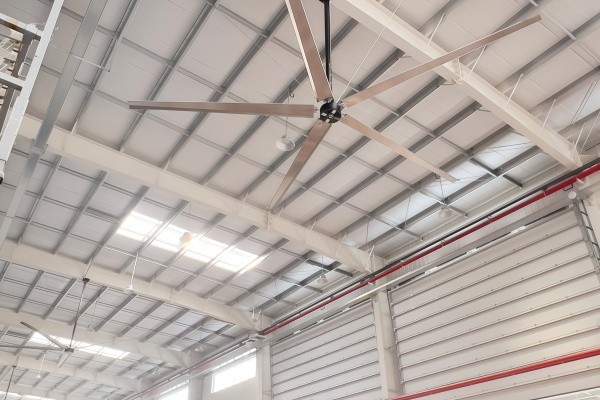
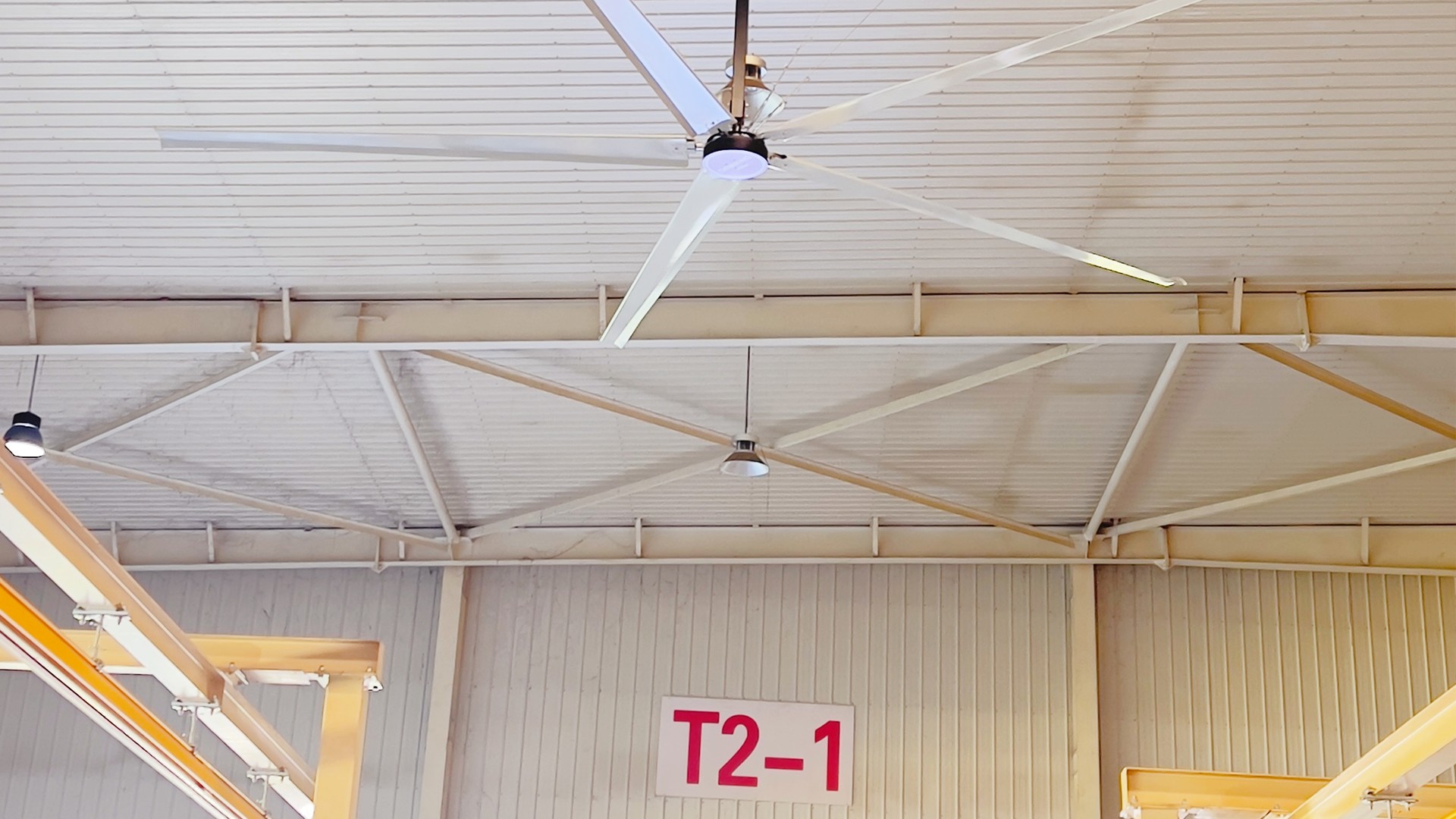
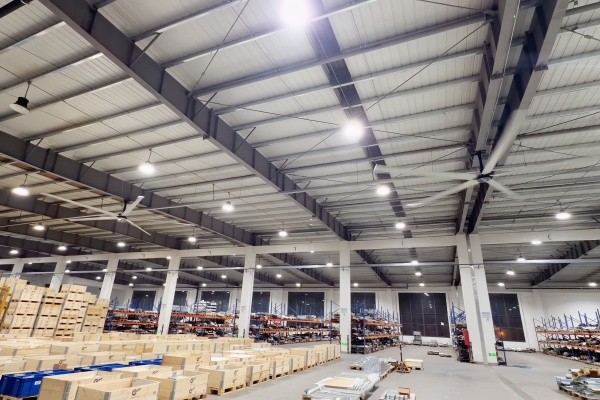
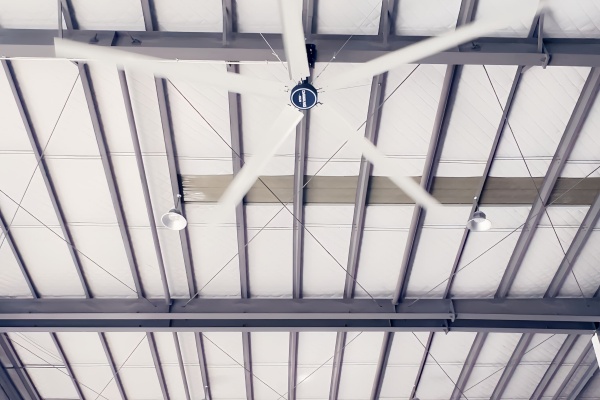
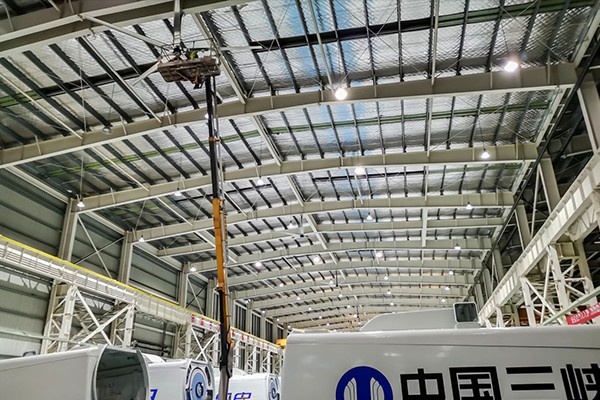
After the November order surge, a distribution center does not get quieter — returns, replenishment and year-end stock keep the floor busy. The complaint is rarely "too hot"; it is dead air in the middle of the sort line, damp cartons near walls and stuffiness at the dock. A Warehouse HVLS Fan addresses circulation, not fresh-air supply.
Representative project conditions
A ~12,000 m² hall, 9–10 m eaves, roller doors cycling throughout the shift,cartons and electronics stored on racking, and a mix of dense manual sorting and forklift lanes. Windows stay closed for the heating season, so stale air accumulates in the middle bays.
Layout logic
Zone by activity, not by electrical circuit — sort line, bulk storage and dock buffer get separate control groups.
Follow the column grid — position units so the downward air column reaches the floor and spreads without hitting racking tops.
Keep dock groups independent — frequently opened doors need a lower setpoint to avoid pulling conditioned air out.
Low-to-medium continuous operation — enough to eliminate static corners, never enough to lift face labels or disturb light packaging.
Winter settings
Reverse, lowest effective rpm during production; scheduled minimum overnight; a temporary step-up when outdoor temperature drops sharply and condensation risk rises. Humidity sensors can trigger the step-up automatically.
Scope boundary
The fan blends indoor air. CO₂ buildup still needs mechanical ventilation or scheduled air changes; local dust or fumes need source extraction. Clarifying this with your industrial ceiling fan supplier at design stage prevents the common "we installed fans but the air is still stale" disappointment.
Any HVLS fan manufacturer China shortlisted for such a project should supply a layout drawing, load review and a seasonal control schedule as standard deliverables — as DAWANG FAN does through its survey-to-4S-maintenance workflow.
Takeaway: Design the airflow zones first; the fan count follows.