Choosing an HVLS fan is not only about diameter. The right system depends on building geometry, airflow goal, and operating model.
1. Check the Space First
Before selecting a model, confirm:
Clear ceiling height
Total floor area
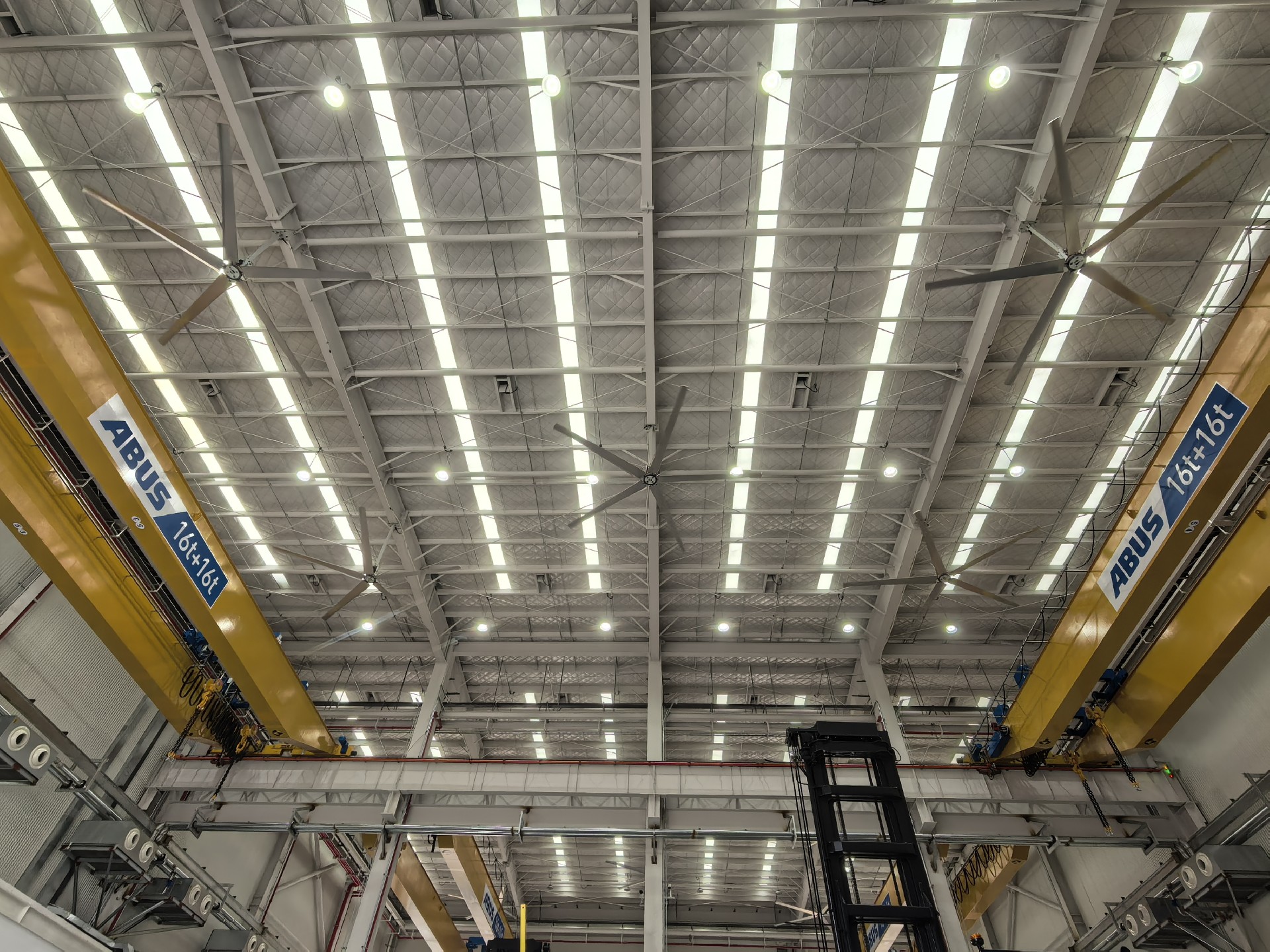
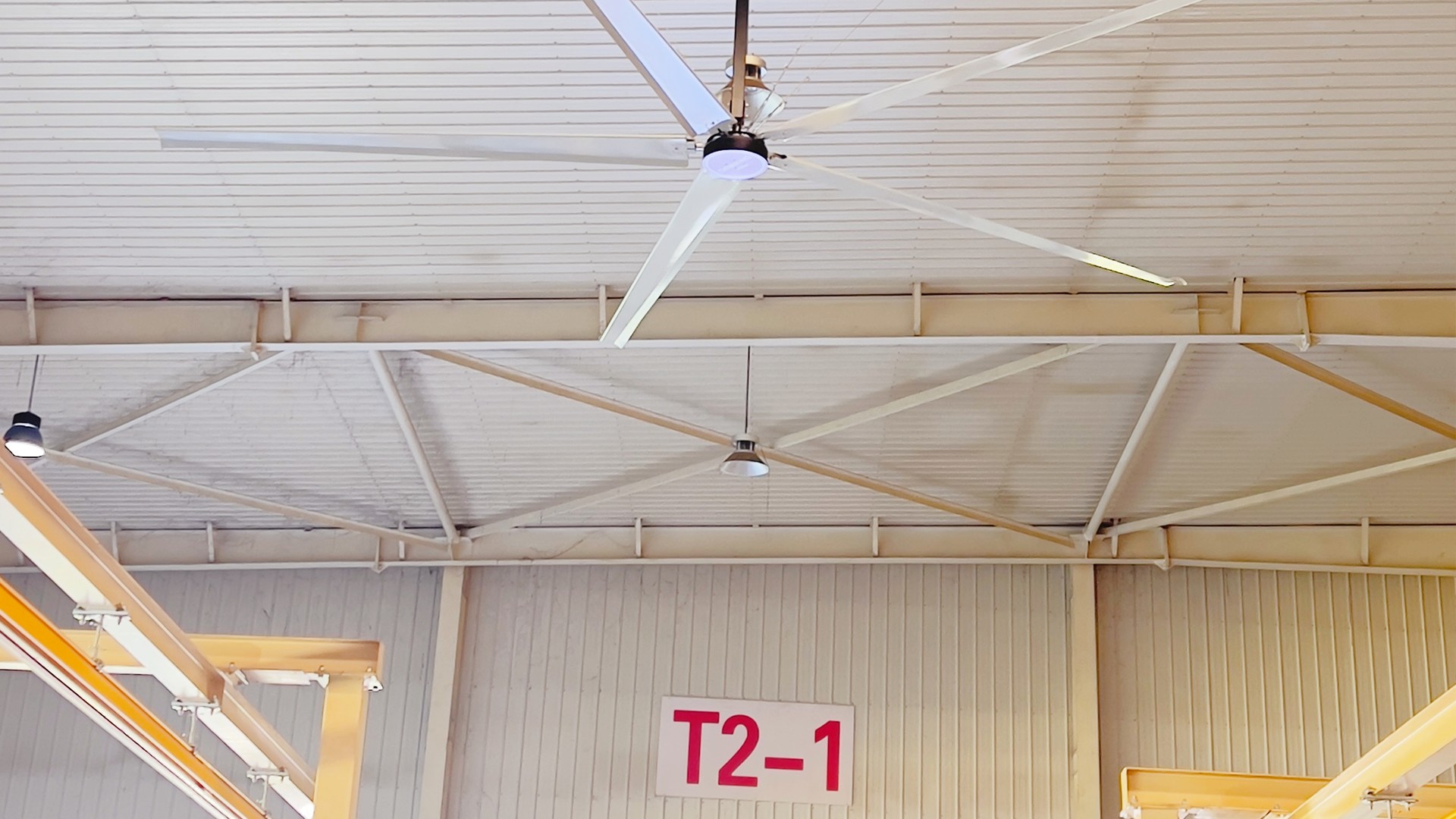
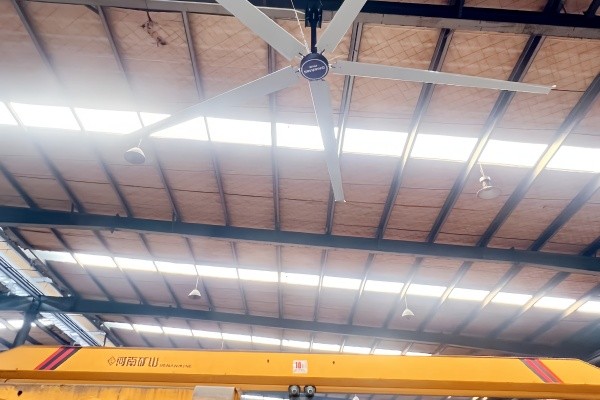
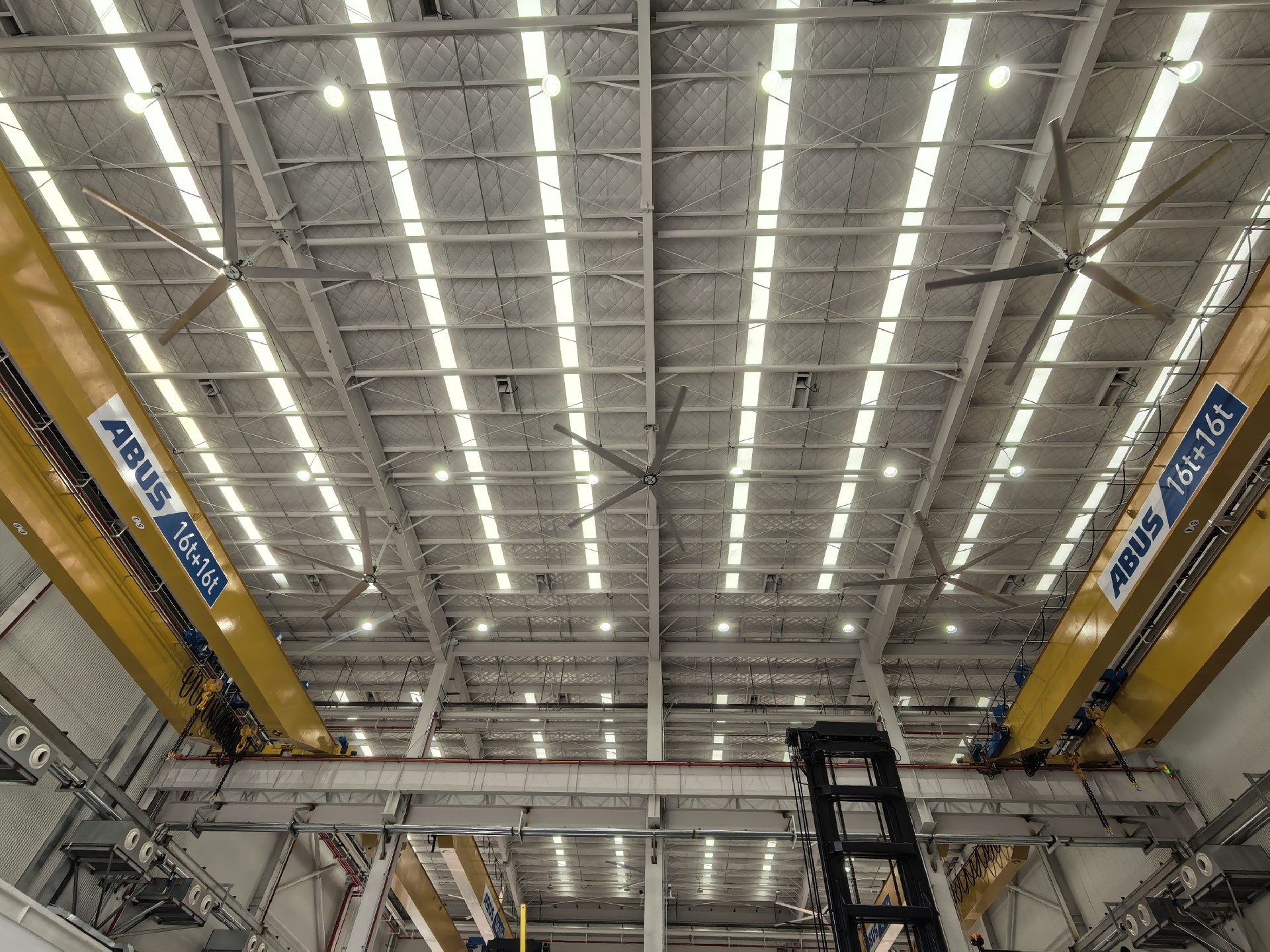
Obstacles: cranes, pipes, lights
Wall openings and exhaust systems
Target temperature or comfort level
As a general rule:
Ceiling height ≥4.5 m is suitable for HVLS ceiling fans
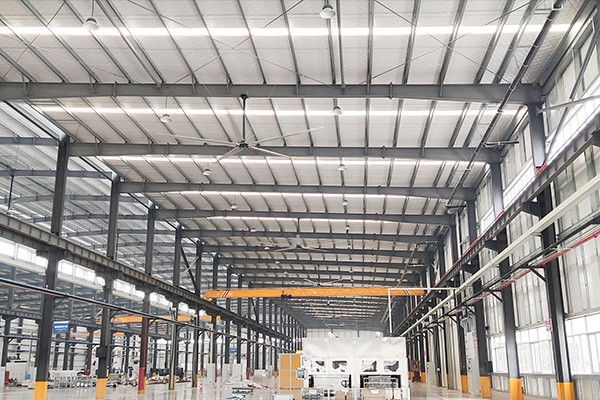
Open span works best for large-diameter units
Partitioned areas may need combined ceiling + mobile fans
2. PMSM vs Geared Motor
Item | PMSM Fan | Geared HVLS Fan |
|---|---|---|
Efficiency | Higher | Stable |
Size | Compact motor | Larger drive head |
Maintenance | Fewer moving parts | Regular checks |
Noise | Lower | Moderate |
Best for | New plants, smart control | General industry |
DAWANG W.Fans uses PMSM. D.Fans uses geared drive for cost-balanced projects.
3. Diameter and Coverage
Larger diameter does not always mean better. It must match blade clearance and airflow path.
Reference:
3.6–5.4 m: small workshops, zones
6.1–7.3 m: warehouses, assembly halls
8.5 m: very large spans, high airflow demand
Coverage also depends on mounting height. Higher installation usually means wider spread but softer floor velocity. Maximum single-unit coverage reaches up to 2000 m² under optimal conditions.
4. Control System
For multi-fan projects, look for:
Group control
Speed scheduling
VFD soft start
Sensor linkage
Remote dashboard
Fire alarm integration
This reduces labor cost and avoids fans running when not needed.
5. Safety Checklist for Procurement
Buyers should ask:
Anti-fall structure tested?
Blade material and connection method?
Motor protection class?
Installation bracket compatible with steel type?
Spare parts and maintenance plan?
Certifications: CE / RoHS / ISO systems

FAQ
How many fans do I need?
Usually one fan per 1000–2000 m² open area, then adjusted by layout and obstacle distribution.
Can HVLS fans work with air conditioners?
Yes. They help distribute cooled air, which may reduce AC load in large zones.
What is a realistic payback factor?
Energy saving depends on climate, runtime, and existing system. We provide simulation-based estimates, not fixed guarantees.
Right fan. Right placement. Measured performance.